


How CRISPR-Cas is revolutionizing molecular ecology and biodiversity monitoring
The CRISPR-Cas revolution is just emerging in molecular ecology and biodiversity research. Samplifylab scientists are bringing the technology from the future to the field. Learn more in our recent review published in Molecular Ecology Resources.
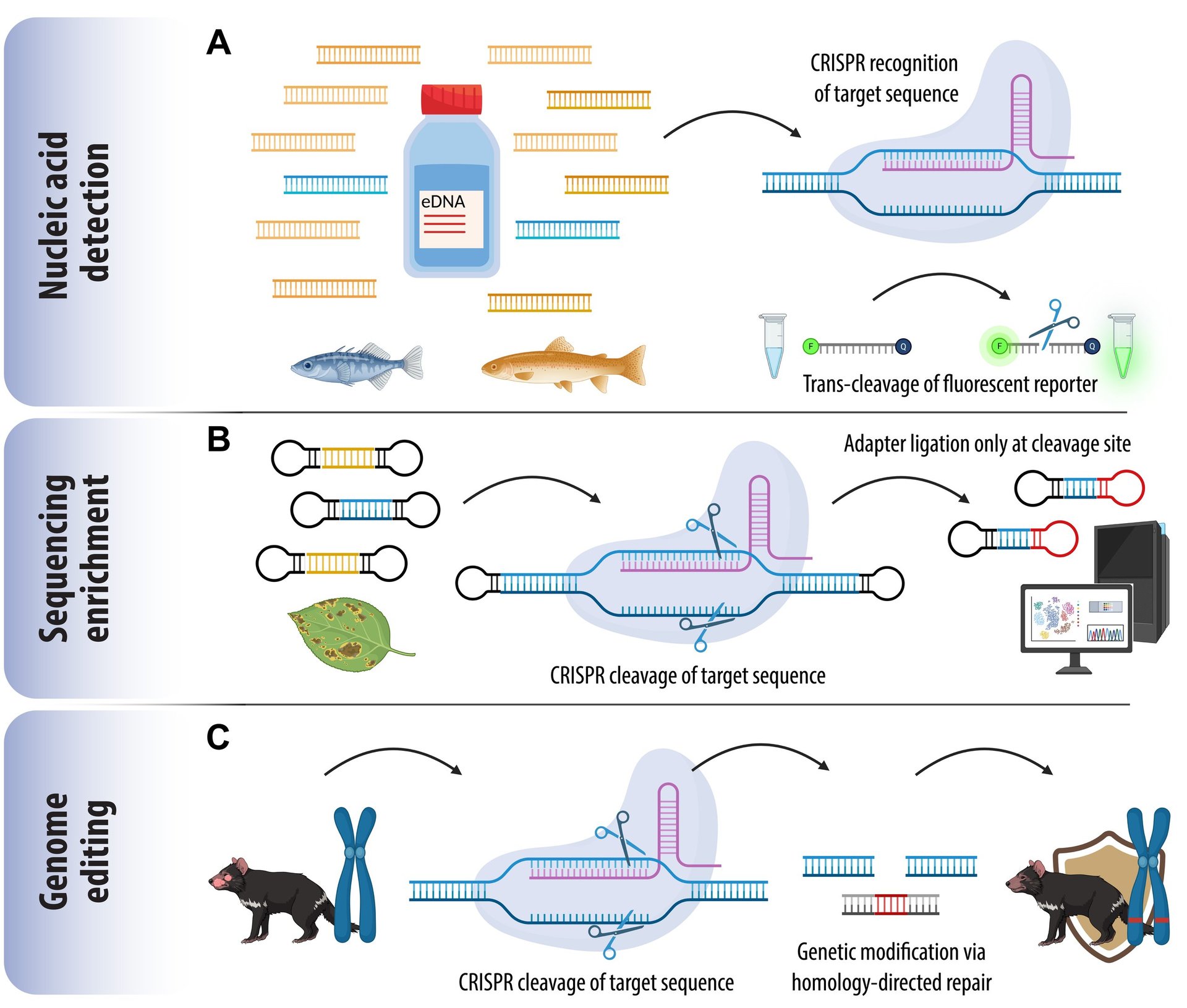
Every biologist has heard of CRISPR-Cas. Infamous for precisely editing the genetic code of organisms, the technology has delivered unparalleled chances and challenges. But ecologists and practitioners are only starting to learn that CRISPR-Cas can do far more than genome editing. Using Cas-nucleases to detect a desired sequence is non-invasive, inexpensive, and incredibly simple and fast.
CRISPR-diagnostics (CRISPR-Dx) are delivering a programmable, universal tool to design 'rapid tests' for identifying and detecting biodiversity. The technology has great potential to revolutionize our way how to monitor species and allows precise detection of our most elusive targets from environmental DNA samples directly in the field and with minimal investment.
Learn more about the diverse applications of CRISPR-Cas technology for biodiversity studies in our recent review The Emergence of a CRISPR-Cas Revolution in Ecology: Applications, Challenges, and an Ecologist's Overview of the Toolbox, published open access in Molecular Ecology Resources.
Interested in having your company or institution's own CRISPR-Cas toolbox for rapid biodiversity detection? Contact a Samplifylab scientists today to explore our diagnostic solutions and discuss custom research in our German lab.
Disclaimer: We do not engage in genome editing research, please contact us only for non-invasive DNA and RNA detection solutions, which do not alter an organism's genetic code.
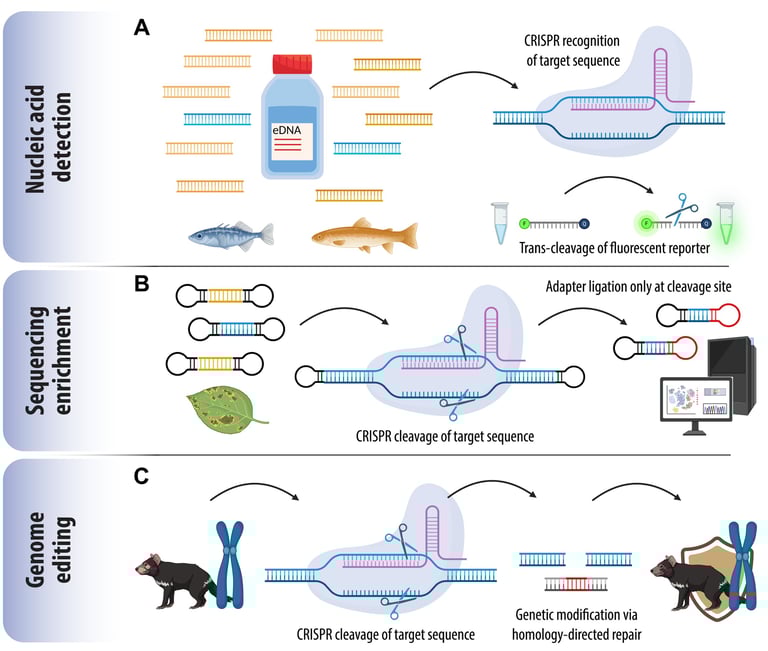
Figure modified from Plewnia et al. (2025) Mol. Ecol. Res. 26, e70086.
Contact
info@samplifylab.com
Imprint
Samplifylab Heine & Plewnia GbR
Wendelinusstr. 48
54296 Trier, Germany